
2026
Good, Evil, Both, or Neither?
View Online

Sign up for a six month free
trial of The Stand Magazine!
In the late 1960s, U.S. Navy Lieutenant Commander Michael George Hoff moved his young family from Oregon to Orange Park, Florida, after receiving orders to report to Naval Air Station Cecil Field in Jacksonville. Soon after, he was deployed to Laos during the Vietnam War, where he flew a single-seat A-7A Corsair II on ground-attack missions.
On January 7, 1970, Hoff transmitted that his aircraft had been hit and he would bail out. Other pilots on the mission felt confident he had ejected before his plane crashed and burned, but no parachute was seen.
According to the Defense POW/MIA Accounting Agency (DPAA), a low-level search of the area found only small pieces of wreckage, but no sign of Hoff. Because of the heavy enemy presence, ground inspection of the crash site was impossible, and the search halted.
Back in Florida, his wife, Mary Ellen Hoff, received a phone call that changed her life.
After just giving birth to her fifth child in 1970, Mary Ellen learned that her husband was missing in action. As she comforted and tended to her children, all under the age of seven, she clung to the hope that her husband would soon be found.
Days turned to weeks. Weeks turned to months, but Hoff was still missing.
Mary Ellen took special notice of the Blue Star Banners hanging in the windows of families with loved ones serving in the armed forces and the Gold Star banners honoring those who had died while in service. This led to her desire to create a symbol specifically for the POW/MIAs.
Toward the end of 1970, Mary Ellen joined the National League of Families of American Prisoners and Missing in Southeast Asia. She refused to idly sit back and wait. Her goal was to bring attention to the missing men and offer hope to the ones waiting on them in agonizing uncertainty.
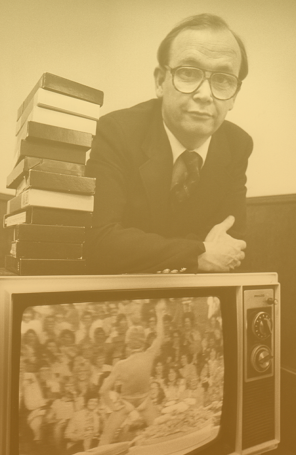
In 1971, she read an article in the Florida Times-Union newspaper about one of America’s oldest flag manufacturers, Annin & Company. She quickly contacted the company in Ohio and was connected with Vice President Norman Rivkees. He was very sympathetic to the POW/MIA cause and appointed an Annin advertising employee, Newt Heisley, to create a banner to represent the missing men.
Although many suggested the banner should be colorful, Mary Ellen specifically requested that it be black and white only. Heisley, a World War II veteran who flew missions in the Pacific, honored her request and took the assignment very seriously.
An article by Cindy Cheatwood explains that Heisley drew inspiration for the soldier’s silhouette from his own son, Jeffrey, who had just unexpectedly returned home from Marine training. While away, he had become seriously ill with hepatitis. Heisley used Jeffrey’s gaunt and emaciated appearance as the model for the profile.
In January 1972, the National League of POW/MIA Families approved Heisley’s design and ordered flags to be produced and distributed. The organization deliberately chose not to seek a copyright or trademark so the symbol could spread as widely as possible. Mary Ellen’s simple banner became a movement.
“It was an exciting time,” Mary Ellen told Cheatwood in an interview. “We were getting discouraged then our spirits were lifted, you know, with the hopes of getting something accomplished.”
Her son told a news team in 2021, “Our home had a formal dining room where she started her crusade to press Washington to account for those missing in action and prisoners of war in Southeast Asia. A large circular dining table was stacked with correspondents that she was both sending and receiving in this effort.” Mike continued, “Even more visually and emotionally striking were the hundreds of silver and copper bracelets overflowing on that table with names of POWs and MIAs from nearly every service branch in every corner of this great nation.”
The funds from the POW/MIA bracelets were used for a memorial at Cecil Field to honor her husband and all who were unaccounted for.
Determined more than ever, she became an activist for prisoners of war and those missing in action and formed a local branch of the National League of POW/MIA Families.
In 1973, she traveled with 60 other POW/MIA families to Laos seeking answers, yet returned home empty-handed and with little information.
Nearly a decade after Hoff’s crash in 1979, Mary Ellen received word that his status was administratively changed to killed in action, although his remains had never been recovered.
That same year, President Jimmy Carter established National POW/MIA Recognition Day, to be observed on the third Friday of September every year.
Ten years after the National League adopted Heisley’s design and created the POW/MIA flag, it was finally flown over the White House in 1982. It was the only flag in history, other than the American flag, to be displayed there.
An official National League POW/MIA flag was again flown over the White House on National POW/MIA Day in 1988. On March 9, 1989, the flag was installed in the U.S. Capitol Rotunda, where it became the only flag ever displayed there.
President George H.W. Bush formally recognized the National League’s flag in 1990, designating it as “the symbol of our Nation’s concern and commitment.” Today, the law requires the POW/MIA flag to be displayed whenever the American flag is flown on all prominent federal properties.
After a long and productive fight, Mary Ellen was eventually given closure 23 years after the tragic phone call. She received a letter in 1993 from the Navy explaining the details of her husband’s death, according to an interview with a Laotian villager. The villager admitted that he was a witness to the horrific crash. He ran to Hoff and stripped him of his flight suit and other belongings to trade with the Vietnamese soldiers in exchange for rice. In his flight suit was a single photo of his young family. The mortally wounded pilot was then left to die alone in an area known for wild animals and never given the honor of a proper burial.
Hoff’s status was later returned to missing in action, where it remains today. While he was listed as missing, the Navy promoted him to the rank of commander.
When asked what Mary Ellen would tell people in the future when they see the POW/MIA flag, she told Cheatwood, “I just hope that young people will notice it and learn about it. It’s up to our schools to make this possible…You know, we all have heroes, young people need them more than we do.” She also added, “Nothing I did was anything [significant], the emphasis should always be on those young men who had just gotten started in life.”
Mary Ellen Hoff died in 2015 at the age of 84. Buried at Jacksonville National Cemetery, her husband’s name is inscribed on her headstone with a POW/MIA flag beside her, where he should have been laid to rest.
The flag she envisioned was more than a piece of cloth - it was a promise.
The most significant part of the flag is the words at the bottom: “You Are Not Forgotten.”
As of 2026, the DPAA states, “More than 80,000 U.S. personnel remain unaccounted for from WWII, Korean War, Vietnam Conflict, Cold War and Gulf War.”
Mary Ellen made it her life’s mission to honor the memory of those who never came home and make sure they were not forgotten. Today, it’s our responsibility to share her story and keep that promise alive. We must diligently teach our children the names and stories of these men who became a memory so we can live in freedom and make memories.
As long as our country remembers the sacrifices made, we can continue to preserve our freedom. Yet the moment we forget our past, we risk losing the very things our heroes fought and died to protect.
Check out these previous AFA articles for additional stories on this topic: “Not forgotten” and “Codes to live by: A POW’s story of triumph over evil.” For children, the Covenant Creek Series Book 3, Veterans Day with Granddaddy Meek, tells the story of POW Col. Smitty Harris.
Sign up for free to receive notable blogs delivered to your email weekly.


Sign up for a free six-month trial of
The Stand Magazine!

OUR FAMILY OF MINISTRIES